



Kids are natural wonders! Bursting with curiosity, fueled by boundless imagination, and brimming with infectious enthusiasm. As educators, our greatest opportunity lies in harnessing these inherent qualities to illuminate the world around them. I’ve witnessed firsthand the extraordinary power of this approach, both during my time leading the Music&English school in Italy and through my enriching experiences teaching in international schools right here in Phnom Penh.
One truth has become crystal clear: children grasp concepts most effectively when learning is an adventure. Forget dry lectures and abstract theories! Instead, imagine a classroom alive with games, splashed with the brilliance of colors, and echoing with the enchantment of fun stories. These aren’t just distractions; they are the very tools that build bridges of understanding for young minds.
Think about it. A vibrant red ball isn’t just a visual; it’s a sensory experience. A rhythmic clap isn’t just a sound; it’s a physical engagement with time and pattern. A captivating story isn’t just words; it’s a journey that sparks imagination and emotional connection. By thoughtfully weaving these elements into our lessons, we speak directly to a child’s natural way of processing the world.
This philosophy resonates deeply with the pioneering work of Maria Montessori. Her emphasis on hands-on learning, sensory exploration, and following the child’s natural curiosity aligns perfectly with my own methodology. Just as Montessori believed in preparing an environment rich with manipulatives for exploration, I believe in creating a learning space brimming with musical instruments, colorful aids, and engaging games that invite discovery.
Furthermore, my approach finds kinship with other child-centered pedagogies like the Orff Schulwerk and Dalcroze Eurhythmics. The Orff approach, with its emphasis on elemental music, movement, speech, and improvisation, mirrors how I use rhythm and playful vocalizations to introduce language and musical concepts. Similarly, Dalcroze’s focus on learning through movement and embodying musical rhythms aligns with the active, experiential nature of my Music&English activities.
What truly sets my methodology apart is the deliberate integration of music and the English language. Music acts as a powerful vehicle, making language learning more memorable, engaging, and emotionally resonant. The rhythm and melody of a song can make vocabulary and grammar stick in a way that traditional drills simply cannot. The joy of singing together creates a positive learning environment where children feel comfortable to experiment and express themselves in a new language.
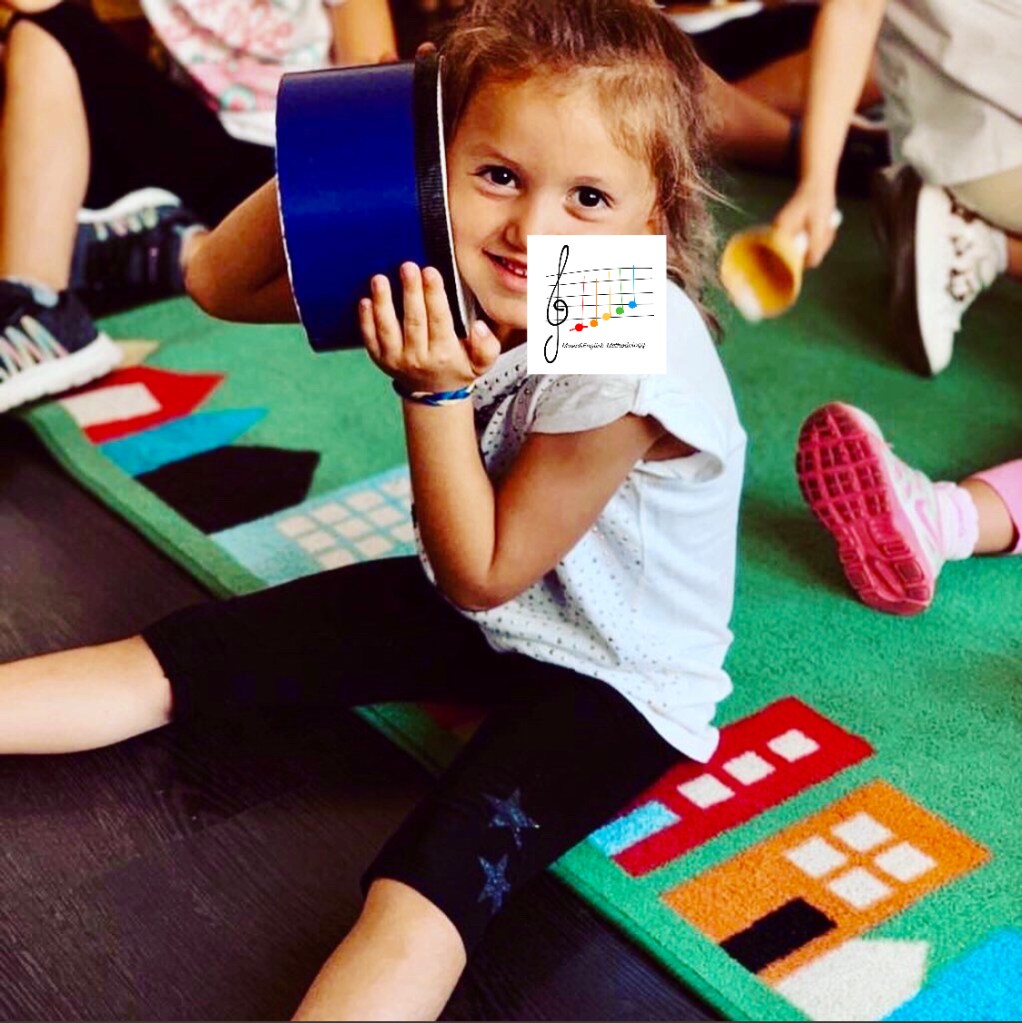
My “Magic Musical Carpet” and specially designed games are prime examples of this philosophy in action. These aren’t just toys; they are carefully crafted tools that transform abstract concepts into tangible experiences. Children learn the names of the notes through colorful characters and engaging stories, much like the whimsical narratives of beloved characters like Pimpa. They internalize rhythms by moving and playing, making learning an active and joyful process.
The validation of this approach comes directly from the most honest and insightful critics: the children themselves!Having had the privilege of teaching students from diverse backgrounds – Chinese, Korean, Cambodian, Spanish, French, Australian, American, and Italian children born abroad – I’ve witnessed firsthand the universal appeal and effectiveness of learning through play, music, and direct experience. Their enthusiastic participation and genuine understanding are the greatest testament to the power of this method.
Inspired by the wisdom of pedagogical giants like Montessori and the vibrant energy of American music education, my goal is to continue to create learning experiences that are not only educational but also deeply engaging and fun. I invite you to explore my classes and materials and witness the transformative power of a learning journey that embraces a child’s natural curiosity and unlocks their full potential, one joyful note and word at a time. The musical adventure awaits – and it starts as early as age four!
 Music & English Methodology