

The Magic of the Rainbow: How Colors Unlock Musical Learning in Music & English
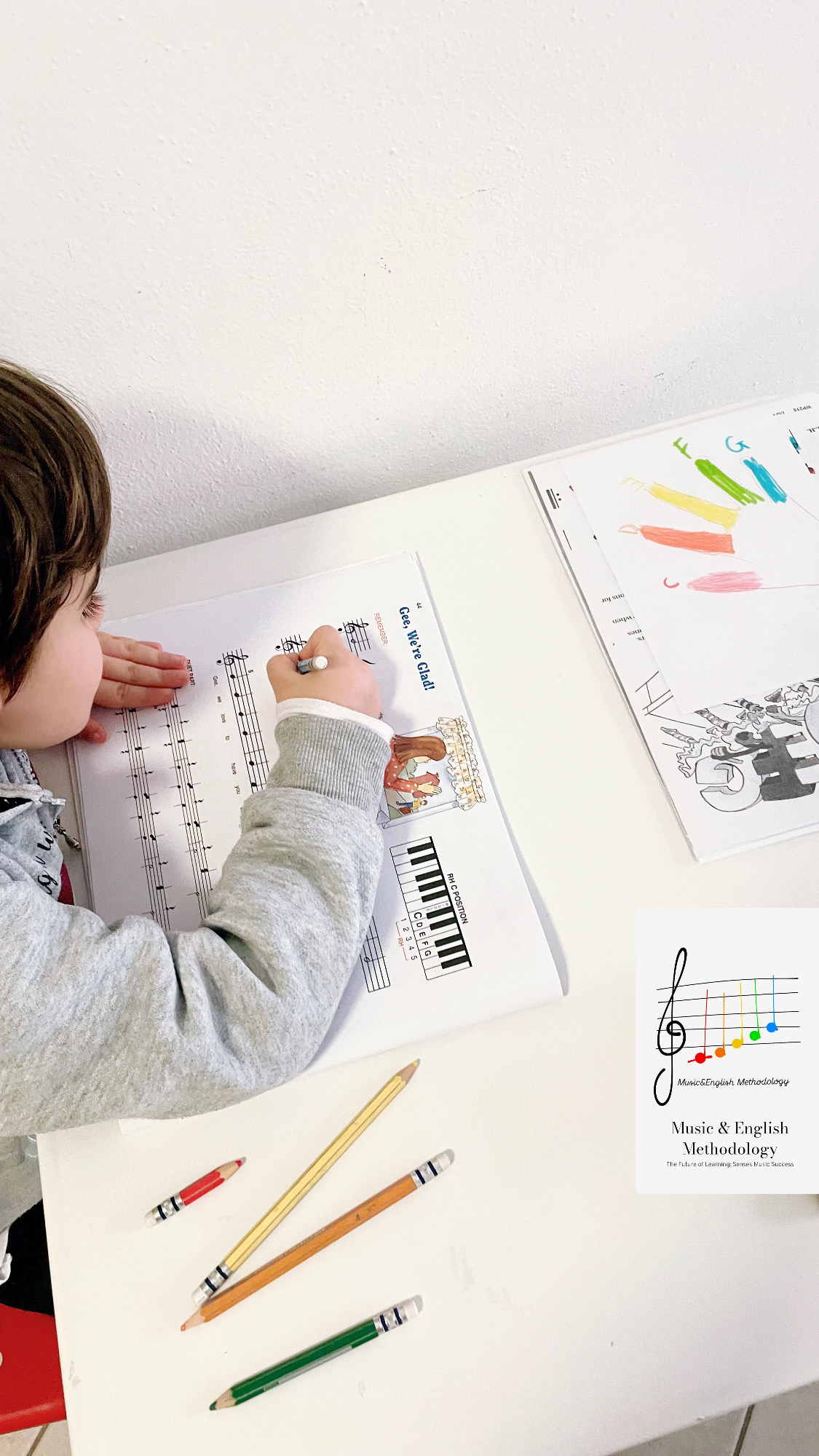
As the creator of the Music&English method, I’ve seen firsthand how children learn best when we speak their language. And what’s more familiar and fascinating to a child than a rainbow? This beautiful order of colors is often one of the first things kids learn to draw, paint, and recognize in the world around them. In a child’s drawing, you’ll often find a happy house, family, a beloved pet, our shining sun, and, to make it even more special, a beautiful rainbow. Because of this, the rainbow is an element kids know well from a very young age.
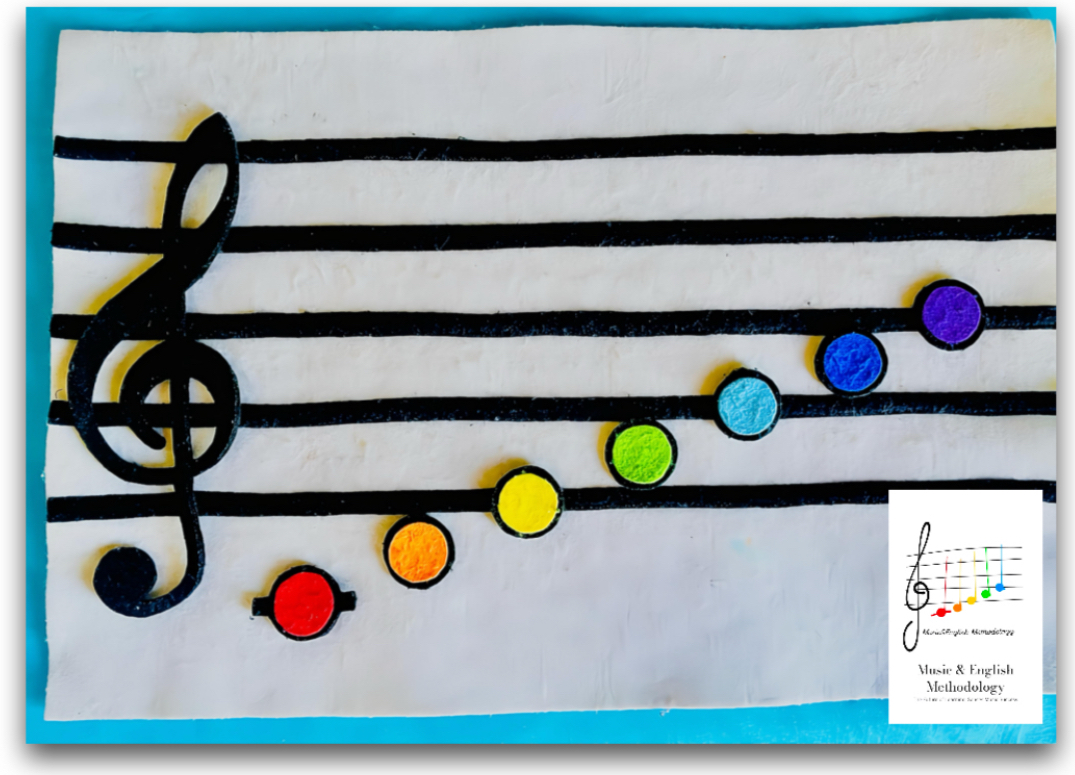
This natural love for colors, and their specific order, is why it’s at the heart of my method. It helps children learn the sequence of musical notes in a way that just listing names like Do, Re, Mi, Fa, Sol, La, Si can’t. Why?
- Written Language Barrier: A 4 or 5-year-old often isn’t fully comfortable with written language. Relying only on note names on paper is like asking them to put a round peg into a square hole without using their hands – it just doesn’t make sense to their developing minds.
- Lack of Magic: Traditional learning often misses the magical, flexible thinking that defines a child’s mind. Kids don’t make logical connections like adults do. They need something visual and intuitive to create a “mental map” that makes sense to them.
That’s where the rainbow’s order comes in. It gives them an instant, familiar structure to organize the notes.
Every Color, A Vibration, An Emotion: The Science Behind the Fun
Beyond their visual appeal, every single color has its own special vibration that creates a specific feeling or emotion. While the actual wavelengths of color vibrations are different from the frequencies of musical notes, both are forms of energy that can be powerfully linked to emotions. This is a core idea in Music&English: we connect these vibrations to deepen understanding.
Let’s explore the powerful emotions each color in our musical rainbow brings:
- RED (Do): The Energetic Start
- Emotion/Feeling: Red is all about power, energy, passion, and excitement. It’s the color of courage and a strong beginning. Think of a stop sign demanding attention or a beating heart full of life.
- Why for Do? The note Do is the primary, most important note – it’s the foundation of almost all music. Our central Do, especially the one on the middle line of the staff, feels energetic and fascinating. Connecting it with red immediately gives it a sense of vital energy and a powerful starting point. Psychologically, red is known to stimulate, increase heart rate, and grab attention, making it the perfect “launch” color for our musical journey. It’s strong, clear, and makes you feel ready for action.
- ORANGE (Re): Joy and Enthusiasm
- Emotion/Feeling: Orange brings feelings of joy, warmth, enthusiasm, and creativity. It’s a friendly color that encourages social interaction and happiness, often linked to sunshine and fun.
- Why for Re? As we move from Do to Re, we’re building up. Orange perfectly captures this energetic but gentle step forward, filling the learning process with a feeling of positive energy and openness to new ideas.
- YELLOW (Mi): Clarity and Optimism
- Emotion/Feeling: Yellow represents happiness, optimism, clarity, and mental alertness. It’s like a bright idea popping into your head, bringing sunshine and light.
- Why for Mi? The note Mi often feels bright and resolved. Linking it to yellow gives children a sense of clear understanding and positive achievement as they reach this third step in the scale.
- GREEN (Fa): Balance and Growth
- Emotion/Feeling: Green symbolizes balance, harmony, growth, and nature. It’s a calming color that brings a sense of security and new beginnings.
- Why for Fa? Fa, especially in a Do-based scale, can feel like a stable, grounded note. Pairing it with green gives a sense of balance and natural progression, showing growth within the musical structure.
- LIGHT BLUE (Sol): Calm and Communication
- Emotion/Feeling: Light Blue evokes calmness, peace, and open communication. It’s the color of the sky and calm waters, bringing a feeling of serenity and spaciousness.
- Why for Sol? Sol is often a strong, grounding note that provides a sense of stability. Light blue perfectly reflects this, giving children a feeling of quiet confidence and ease as they reach this important note.
- DARK BLUE (La): Depth and Intuition
- Emotion/Feeling: Dark Blue conveys depth, wisdom, trust, and intuition. It’s a more serious and reflective color than light blue, suggesting inner peace and stability.
- Why for La? La can feel like a step into deeper emotional understanding in music. Linking it to dark blue helps children connect with a sense of quiet confidence and inner wisdom as they explore the scale further.
- PURPLE (Si): Magic and Transformation
- Emotion/Feeling: Purple is associated with mystery, magic, creativity, and transformation. It often represents imagination and spiritual understanding.
- Why for Si? Si is the final note before returning to Do, often creating a sense of anticipation or resolution. Pairing it with purple highlights this feeling of nearing completion and transformation, ready to transition back to a new beginning.
Music&English: Empowering Minds, Nurturing Souls
By using the familiar and fascinating order of the rainbow, Music&English and tools like “My Magic Music Staff” make learning music intuitive and deeply felt. This method taps into children’s natural ability to learn through senses and emotions, not just words. It’s like asking them to easily put a round peg into a round hole – it just makes sense! This process develops their motor skills and thinking abilities in a fun, natural way, without any stress or confusing tasks.
This approach helps children overcome mental hurdles and grasp complex ideas that would typically be impossible for their age. It leads to a powerful personal growth that goes beyond normal expectations, building a strong and natural foundation for their future development.
 Music & English Methodology