
Authentic Materials
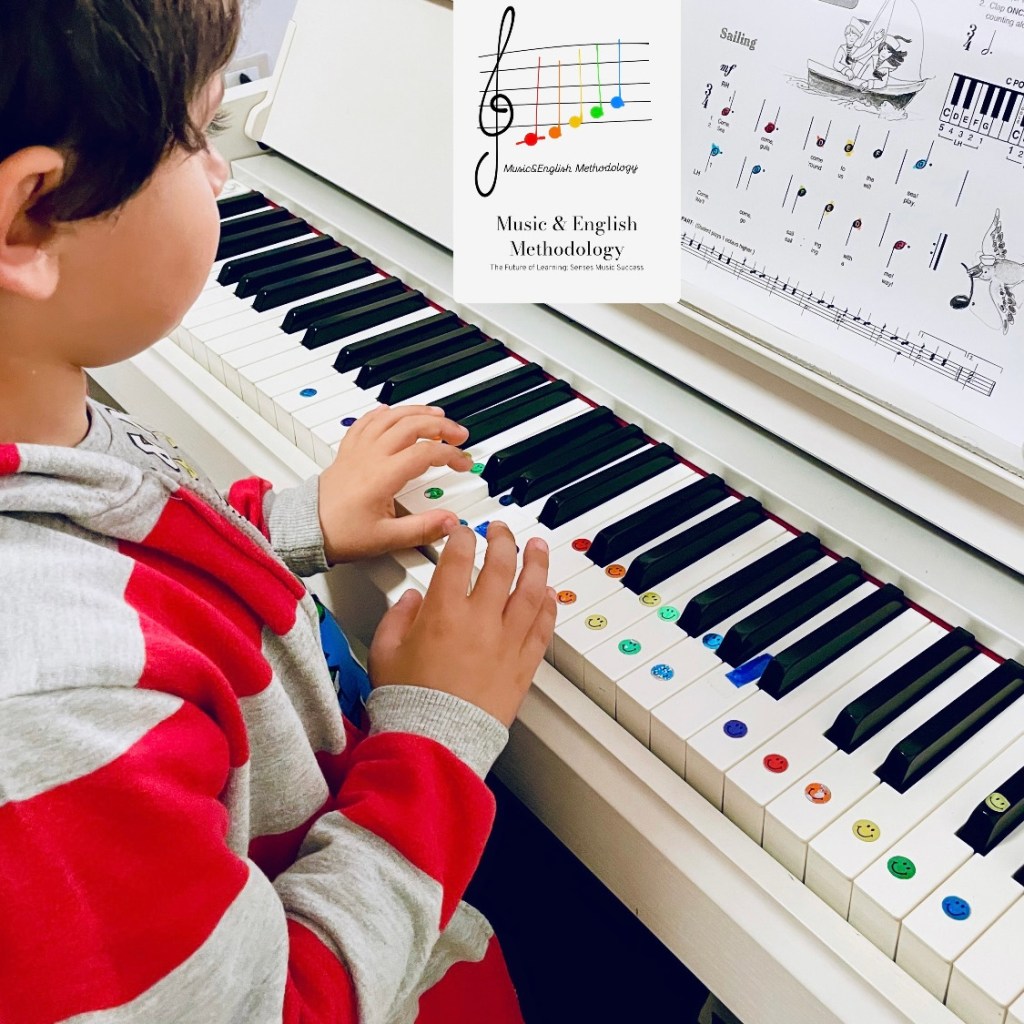


The idea that music can unlock language learning is a powerful one. As research from academics like Ifeoma Omolara (University of Nigeria, Nsukka) confirms, using music in the English classroom makes learning more engaging, improves vocabulary, and enhances listening and speaking skills. But what if we could take those proven benefits and amplify them with a methodology that taps directly into a child’s natural instincts?
My Music&English method is the next step in this journey. It’s a holistic, multi-sensory approach that doesn’t just use music as a tool—it integrates music into a complete system of discovery, development, and deep learning.
The Music&English Method: The Blueprint for a “Biological Code”
While traditional music-based teaching focuses on songs and videos, Music&English goes deeper. My method is a revolutionary discovery of an intrinsic biological code that exists within every child. This is a system that works in perfect harmony with a child’s natural way of learning by connecting visual, auditory, emotional, and tactile experiences into one powerful learning path.
Think of it as a complete ecosystem:
- Visual-Auditory Bridge: We use the power of rainbow colors to create an intuitive link between what a child sees and the sounds they hear.
- Emotional Resonance: We build a positive, joyful environment where learning is driven by emotion and fun, not just memorization.
- Hands-On Discovery: We use unique, tactile games to turn abstract concepts into physical experiences a child can touch, move, and understand.
This comprehensive approach creates a “mental code” that is not only effective but, as research confirms, deeply memorable.
From Theory to Practice: How Music&English Elevates Key Concepts
The academic paper you provided highlights the benefits of using music in various ways. Here’s how my Music&Englishmethod takes these concepts to a new level:
1. Beyond Song Lyrics: The Power of Color-Coded Memory
The paper notes that song lyrics provide a rich source of authentic language, helping with vocabulary and grammar. My method supercharges this. By assigning a specific color to each musical note, we give the brain an immediate visual pattern. As a child sings a song, they are not just hearing words; they are seeing colors and building a spatial map in their mind. This makes the logical structure of music and language intuitive, creating a “biological download” of knowledgethat’s nearly impossible to forget.
2. Beyond Music Videos: Tactile Learning and the “Magic Carpet”
The paper mentions music videos as a way to provide visual context. My method goes a step further by making the visuals tangible and interactive.
- My “Magic Music Carpet” and “My Magic Music Staff” are unique games that allow children to physically place, move, and interact with notes and musical symbols.
- This hands-on, tactile learning is the foundation of my method. It directly aligns with the philosophies of educational pioneers like Maria Montessori (“The hand is the organ of the mind”) and Friedrich Fröbel, who emphasized that children learn best by playing with objects.
This physical engagement turns learning into a full-body experience, a concept also championed by Carl Orff and Émile Jaques-Dalcroze in their work on rhythm and movement.
The Results: What Makes Music&English a Leading Method?
The research shows that music-based teaching improves motivation, engagement, and skills. My experience with hundreds of children has proven that Music&English takes those benefits and turns them into lasting results. It’s not just about a temporary boost in vocabulary or speaking fluency. It’s about a complete learning journey that also develops a child’s focus, balance, and self-confidence.
My method isn’t just a teaching approach; it’s a profound application of established educational principles, creating a unique and effective pathway to understanding music and boosting overall cognitive development. It’s an investment in a child’s holistic potential, preparing them for a future of discovery and achievement.
 Music & English Methodology